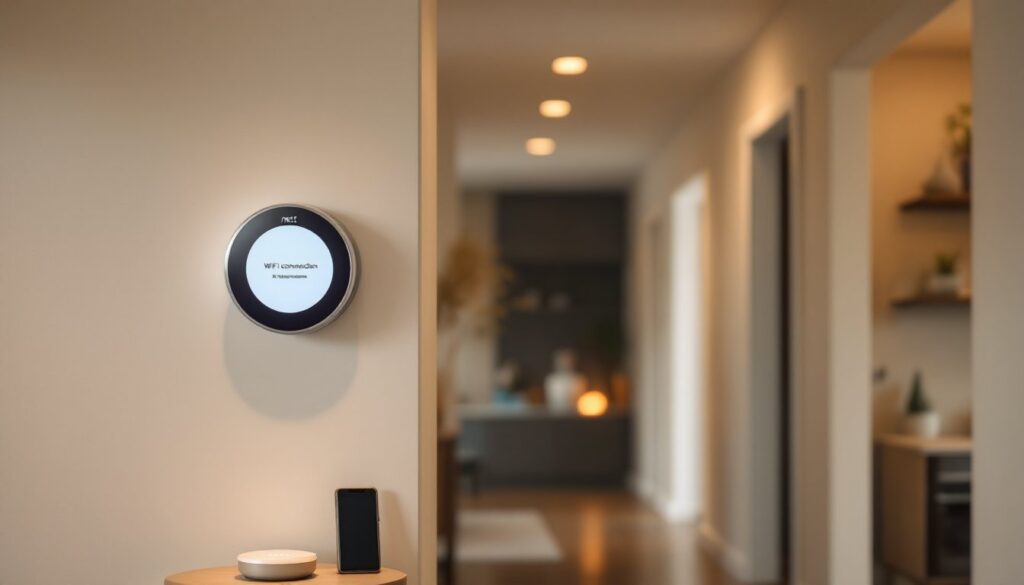

Few things are more frustrating than a smart home device that refuses to connect to your network. A Nest thermostat not connecting to WiFi can leave your home without remote temperature control and lock you out of energy-saving automations. The good news: most WiFi connection issues stem from simple oversights, weak signal strength, outdated firmware, incorrect passwords, or a router that needs a fresh restart. Before you consider replacing the unit or calling a professional, work through these seven troubleshooting steps. Most homeowners can resolve the problem in 15 to 20 minutes.
Table of Contents
ToggleKey Takeaways
- A Nest thermostat not connecting to WiFi is usually caused by weak signal strength, incorrect passwords, outdated firmware, or a router that needs restarting—most issues resolve within 15 to 20 minutes.
- Check your WiFi signal strength at your thermostat’s location; a signal weaker than -70 dBm requires repositioning your router, using a mesh system, or installing a WiFi range extender.
- Restart your Nest thermostat by turning off the HVAC breaker for 30 seconds, then restart your router by unplugging it for 60 seconds—this simple step fixes roughly 20% of connection issues.
- Verify your WiFi password character-by-character and confirm your network band, as older Nest models support only 2.4 GHz while newer models support both 2.4 and 5 GHz frequencies.
- Update your Nest device firmware through the Google Home app to fix known WiFi bugs; if the signal is too weak, temporarily move the thermostat closer to your router during the update.
- If troubleshooting fails, forget your WiFi network on the thermostat and reconnect from scratch, or perform a factory reset as a last resort before contacting Google support.
Check Your WiFi Network and Signal Strength
The first and most overlooked cause of Nest thermostat connectivity trouble is simply poor signal strength. Your thermostat sits on the wall, often in a hallway or central location that may be far from your router. Distance, walls, and interference from microwaves or cordless phones can all weaken the signal.
Start by verifying that your WiFi network is broadcast in your thermostat’s location. Pull up the available networks on your phone from the spot where your thermostat is mounted. If your network shows up with a weak signal (one or two bars), that’s your first clue. Most smart home devices, including Nest, perform best with a signal strength of at least -70 dBm or stronger.
If the signal is marginal, consider repositioning your router or investing in a WiFi mesh system to extend coverage. Moving the router just a few feet, elevating it above furniture, or moving it away from physical obstacles can make a dramatic difference. If you can’t relocate the router easily, a WiFi range extender placed midway between your router and thermostat often solves the problem without a full network overhaul.
Restart Your Nest Thermostat and Router
A hard restart clears temporary glitches that prevent connection. Start with your Nest thermostat: flip the breaker controlling your HVAC system for 30 seconds, then flip it back on. This performs a full power-down and restarts the device cleanly.
While the thermostat reboots, restart your router as well. Unplug the router from power for 60 seconds, then plug it back in and wait three to five minutes for it to fully boot up and reestablish your network. This simple step resolves connection issues in roughly 20% of cases because it clears out stale network registrations and resets the router’s memory.
Don’t skip this step just because it sounds basic. Many homeowners skip the restart because they assume they’ve already done it, but in 2026, routers often stay plugged in for months without a proper power cycle. After both devices finish booting, check whether your Nest can now find and connect to your WiFi network.
Verify Your WiFi Password and Network Settings
Incorrect credentials are surprisingly common. Even if you connected your Nest months ago, you may have changed your WiFi password since then or your thermostat may be trying to connect to a saved network that no longer matches your current setup.
On your Nest thermostat’s display, navigate to Settings > Network > WiFi > View Available Networks. Find your network name (SSID) and confirm it’s the one you intend to connect to. Note whether you’re using a 2.4 GHz or 5 GHz band, some older Nest models support only 2.4 GHz, while newer models support both. If your router broadcasts a single SSID for both bands (dual-band), you may need to split them into separate networks in your router settings so the Nest can specifically target the 2.4 GHz band.
When you enter your password, verify it character-by-character, paying attention to capital letters, numbers, and special characters. Passwords are case-sensitive, and even a single typo prevents connection. If you’re unsure of your current password, log into your router’s admin page (usually accessible via your phone’s browser at 192.168.1.1 or 192.168.0.1) and confirm the SSID and password settings there.
Update Your Nest Device to the Latest Firmware
Outdated firmware is a frequent culprit behind WiFi issues. Google regularly releases firmware updates that fix bugs, improve compatibility, and enhance security. If your Nest thermostat hasn’t connected to the internet, it can’t automatically fetch and install updates, putting you in a catch-22.
To work around this, connect the Nest to your WiFi using the mobile app as your intermediary. Open the Google Home app on your phone, navigate to your Nest thermostat, and check Device Settings > Firmware Version. If an update is available, you’ll typically see a notification or prompt to install it. The app downloads and installs the update over WiFi, which often resolves connectivity problems caused by known bugs in older firmware versions.
If your Nest is too far from your router to maintain a stable enough connection for an update, temporarily move it closer, you can uninstall it from the wall and set it on a nearby table, complete the update, and then remount it in its permanent location. This extra effort prevents repeated connection issues down the line.
Forget and Reconnect to Your WiFi Network
Sometimes your Nest thermostat retains corrupted WiFi profile data that prevents it from connecting, even if all other settings are correct. Forgetting the network and reconnecting from scratch forces the device to re-establish a clean connection profile.
On your thermostat, go to Settings > Network > WiFi and select your network from the list. Choose Forget This Network, confirm the action, and wait a moment. Then navigate back to Settings > Network > WiFi and select your network again. Enter your password carefully and confirm. The device will reconnect as if this is the first time it’s seeing the network.
This step is especially useful if you’ve made recent changes to your router settings, changed your password, or if the thermostat was previously on a different network. Many homeowners report this resolves stubborn connection problems that nothing else fixed.
Reset Your Nest Thermostat to Factory Settings
If none of the above steps work, a factory reset is your last troubleshooting move before contacting Google support or considering a replacement. A factory reset erases all custom settings, schedules, and WiFi profiles, returning the thermostat to its original state. Use this only after you’ve exhausted all other options.
On your Nest thermostat, navigate to Settings > Reset > Factory Reset > Yes, Reset. The device will power down and restart, wiping all data. This process takes a few minutes. Once the thermostat boots up, you’ll go through the initial setup as if it’s brand new. Select your WiFi network and enter your password carefully. Many users report that a factory reset resolves persistent WiFi issues because it clears out any conflicting configurations or corrupted settings that accumulated over time.
Before you reset, write down any custom schedules or settings you’ve configured so you can restore them afterward. The factory reset is drastic, but it’s simpler than replacing the unit and often works when everything else fails. According to detailed troubleshooting guides, most Nest WiFi issues resolve before reaching this stage, but the reset serves as a reliable fallback.
Conclusion
A Nest thermostat that won’t connect to WiFi is frustrating, but the fix is usually straightforward. Check your signal strength, restart both devices, verify your password, update firmware, forget and reconnect to the network, and only then resort to a factory reset. Work through the steps methodically, and you’ll restore connectivity in most cases. If none of these steps succeed, your Nest may have a hardware defect, contact Google support for warranty options. In the meantime, you can still control your HVAC manually using the thermostat’s physical buttons.