
Navy blue kitchen cabinets have moved from a bold accent choice to a mainstream design staple. Homeowners and designers are embracing deeper, more sophisticated blues as a way to add depth and personality to kitchen spaces without the starkness of black or the coldness of stark gray. Unlike trendy cabinet colors that fade in a season, navy works across multiple design styles, pairs well with various countertop materials, and ages gracefully. Whether you’re planning a full kitchen remodel or refreshing your cabinetry, understanding how to style navy blue cabinets, and whether they’re the right choice for your space, requires more than just picking a color swatch.
Key Takeaways
- Navy blue kitchen cabinets offer a sophisticated, timeless alternative to white kitchens that works across multiple design styles and ages gracefully without looking trendy.
- Proper lighting is critical when installing navy blue cabinets—use under-cabinet LED strips (warm white 2700K) and adequate recessed or pendant lights to prevent the space from feeling dark or cramped.
- Navy blue cabinets pair best with white or cream quartz for maximum contrast, gray stone countertops for a moody look, or warm wood tones in transitional and farmhouse kitchens.
- Matte or satin finishes are ideal for navy cabinets in most kitchens, while semi-gloss finishes require ample natural light to avoid looking dated or plastic.
- Before committing to navy blue kitchen cabinets, view real installed examples in different lighting conditions and request finish samples delivered to your home to ensure the color feels warm and inviting rather than cold and heavy.
- Navy cabinets require strategic styling with a complementary backsplash (classic white subway tile is safest), light-colored walls, and balanced flooring to prevent the kitchen from feeling overwhelmed by dark tones.
Why Navy Blue Cabinets Are Having a Major Kitchen Moment
Navy blue cabinets represent a shift away from the all-white kitchen trend that dominated the last decade. While white remains timeless, navy offers richness and visual weight without being as demanding as charcoal or black. The color doesn’t show fingerprints or minor dust as quickly as white, making it practical for busy households. Navy is also neutral enough to evolve with changing decor, you can shift your backsplash, hardware, and countertops without the cabinets feeling outdated.
The psychology behind navy’s appeal is straightforward: it evokes calm and stability while feeling upscale and collected. Unlike bold reds or greens that require careful coordination, navy plays well with natural materials like wood, stone, and metal. When lit properly, navy develops subtle depth and richness that photograph well and feel inviting in person. For homeowners tired of sterile white kitchens, navy offers a sophisticated alternative that doesn’t require committing to a statement color like emerald or burgundy.
Design Styles That Work Best With Navy Blue Cabinets
Contemporary and Modern Kitchens
In contemporary spaces, navy cabinets shine when paired with clean lines, minimalist hardware, and bright, even lighting. Matte or satin finishes work better than high-gloss for modern aesthetics: they reduce visual glare and feel less formal. Pair navy uppers with a contrasting lighter island or base cabinetry for visual interest. Stainless steel hardware, slab pulls or simple bar handles, keeps the look streamlined.
The key to modern navy is avoiding busyness. Skip ornate backsplash patterns: instead, choose subway tile, solid color panels, or even continuous wall color. White or light gray countertops create contrast, while waterfall edges on an island add contemporary polish. Recessed or track lighting, rather than ornate fixtures, prevents the space from feeling heavy even though the darker cabinet color.
Transitional and Traditional Aesthetics
Transitional kitchens benefit enormously from navy cabinets. They bridge the gap between modern minimalism and classic comfort by pairing navy with warm wood tones, softer hardware, and traditional backsplash treatments. Raised-panel cabinet doors or subtle shaker styles feel more approachable than flat slabs when painted navy.
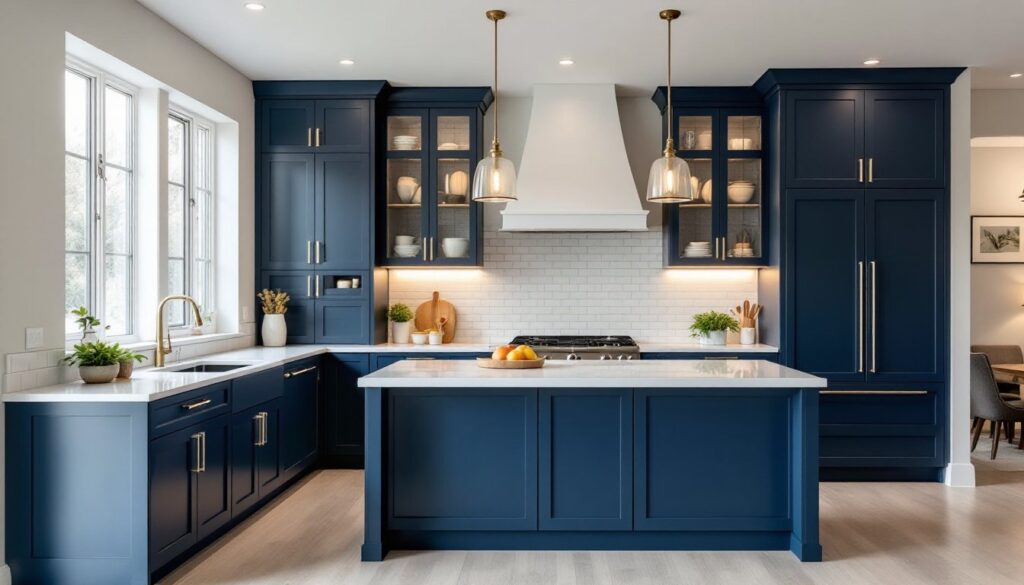
Traditional kitchens, think farmhouse, cottage, or classic colonial, use navy as a grounded anchor. Pair it with cream or off-white trim, brass or oil-rubbed bronze hardware, and marble or granite countertops. A warm, busy backsplash (subway tile laid in a herringbone pattern, or patterned ceramic tiles) adds character without competing with the cabinet color. Glass-front cabinets displaying white dishes or blue-and-white ceramics reinforce the color story. Pendant lighting with warm-toned shades completes the look.
Color Combinations and Countertop Pairings
Navy cabinets are remarkably flexible with countertop materials, but some combinations are more harmonious than others. White or cream quartz provides maximum contrast and brightness, ideal if your kitchen lacks natural light. This pairing feels classic and works across styles. Gray or charcoal counters, whether quartz, laminate, or butcher block, create a moody, cohesive look that’s sophisticated without being sterile.
Natural stone countertops like marble, granite, or soapstone add texture and warmth. Marble with navy reads formal and European: soapstone feels earthy and rustic. Butcher block or wood counters add warmth and work particularly well in transitional or farmhouse settings. Keep wood sealed and maintained to prevent water damage near the sink.
For backsplashes, white subway tile remains the safest choice, it won’t compete with navy. Patterned tiles in blues, grays, and whites can work if kept relatively subtle. Solid color back-painted glass or matte finish tiles prevent reflection that might clash. If you’re using a lighter countertop, consider a darker or patterned backsplash to avoid the “uppers and backsplash competing with nothing to ground it” effect. Paint the walls a warm white or soft gray to keep the navy from overwhelming the space, dark cabinets plus dark walls plus dark flooring is a recipe for feeling cramped.
Cabinet Finishes and Material Options
The finish of your navy cabinets significantly affects how they look in different lighting. Matte or flat finishes absorb light, creating depth and hiding dust: they feel modern and understated. Satin finishes offer a subtle sheen that’s versatile across styles, modern enough for contemporary kitchens, warm enough for transitional spaces. Semi-gloss or high-gloss finishes reflect light and work best in kitchens with ample natural or artificial light: in dim kitchens, they can feel plastic or dated.
When it comes to cabinet box construction, options include plywood with veneer, solid wood, and MDF (medium-density fiberboard). Plywood with quality veneer is durable and resists warping: solid wood is more expensive but heirloom-quality: MDF is budget-friendly but less moisture-resistant in high-moisture areas. If your kitchen is humid or near a sink, prioritize moisture-resistant materials.
Painted cabinets (where cabinet boxes are standard wood or MDF and then painted) are common and affordable. Ensure the painter uses cabinet-grade primer and paint designed to resist chipping and moisture. Stained or glazed finishes showing wood grain beneath a navy tint add warmth and depth, these work beautifully in traditional or transitional kitchens. Ask whether the finish is a true navy paint or a glaze over a lighter base: this affects durability and repairability. Navy stain tends to appear more expensive and refined but requires more maintenance than paint. Whichever finish you choose, plan for touch-ups, cabinet doors take hits, and navy will show scratches more than white.
Lighting and Backsplash Ideas to Complement Navy Blue
Navy cabinets absorb light, so proper lighting is essential to prevent your kitchen from feeling dark or gloomy. Under-cabinet lighting, whether LED strips, puck lights, or linear fixtures, illuminates the countertop and prevents shadows. Warm white (2700K) LED lights pair best with navy: they won’t create a sterile, clinical feel.
Pendant lights above an island should have enough brightness to illuminate the workspace. Metal shades (brass, copper, or matte black) create style: translucent or open shades allow more light through. Space pendants 30 inches apart for even coverage. Recessed ceiling lights should be on a separate circuit or dimmer: this lets you adjust brightness based on time of day or task. Avoid placing recessed lights directly above navy cabinets where they’ll cast shadows.
For backsplashes, classic white subway tile remains the safest, most forgiving choice. Lay it in a running bond pattern for traditional appeal or stack-bond for contemporary feel. Larger format tiles (12×24 inches) create fewer grout lines and a more modern appearance: small penny tiles feel playful and vintage.
Patterned tiles in navy and white can work if the pattern isn’t too busy, geometric patterns or classic damask are less risky than complex floral designs. Ensure pattern samples are installed at full scale in your space before committing: what looks good in a showroom may feel overwhelming in person. Solid color tiles in warm whites, soft grays, or even pale blue complement navy without competing. A textured finish reduces glare and adds subtle sophistication.
Making Navy Blue Cabinets Work in Your Kitchen
Navy blue kitchen cabinets offer a refined, sophisticated alternative to white while remaining flexible across design styles and practical for everyday use. Success depends on honest assessment: Do you have adequate lighting, or will navy absorb light and make the space feel cramped? Are your walls and floors light enough to balance the darker cabinetry? Can you commit to the color for 10+ years, or might you tire of it?
Start by viewing installed examples, photos online show promise, but real kitchens in different lighting conditions reveal whether navy feels warm and inviting or cold and heavy. If you’re having custom cabinetry built, request finish samples delivered to your home and viewed at different times of day. For stock or semi-custom options, cabinet-grade paint offers budget-friendly flexibility: if navy doesn’t feel right, repainting is more feasible than replacing doors.
Navy cabinets aren’t a shortcut to a stunning kitchen, they’re one component of a well-planned design. Pair them with quality countertops, thoughtful lighting, complementary colors, and proper finishing touches. When executed with intention, navy blue cabinets deliver a timeless, sophisticated kitchen that feels less trendy and more like a carefully considered design choice.